
Solar Shade Structures & Commercial Solar
MMPV Design provides architectural services for commercial solar energy projects across the United States, supporting rooftop systems, ground-mounted installations, and solar shade structures. Our work focuses on code compliance, permitting, and site planning. Building, zoning, fire, and accessibility requirements play a direct role in determining whether a solar project is feasible and how it can be laid out on a given site.
We support project teams by applying those requirements to specific sites and preparing architectural documents suited to the review process. This includes solar projects at commercial sites as well as school campuses and other regulated facilities, where additional review standards may apply.

Common Code, Site, and Review Challenges on Solar Projects
Approval challenges on commercial solar projects influence layout, project feasibility, and construction schedules. In practice, these challenges are most often tied to local code interpretation and to the integration of solar power systems into active, occupied sites.
Jurisdictional Code Interpretation
Building and fire codes are adopted and modified by individual jurisdictions, and requirements that apply in one location may be more stringent or interpreted differently in another. This is especially common for solar shade structures like carports and canopies, which often raise questions about occupancy classification, area, sprinkler requirements, construction type, and fire access.

Structures and Site Layout
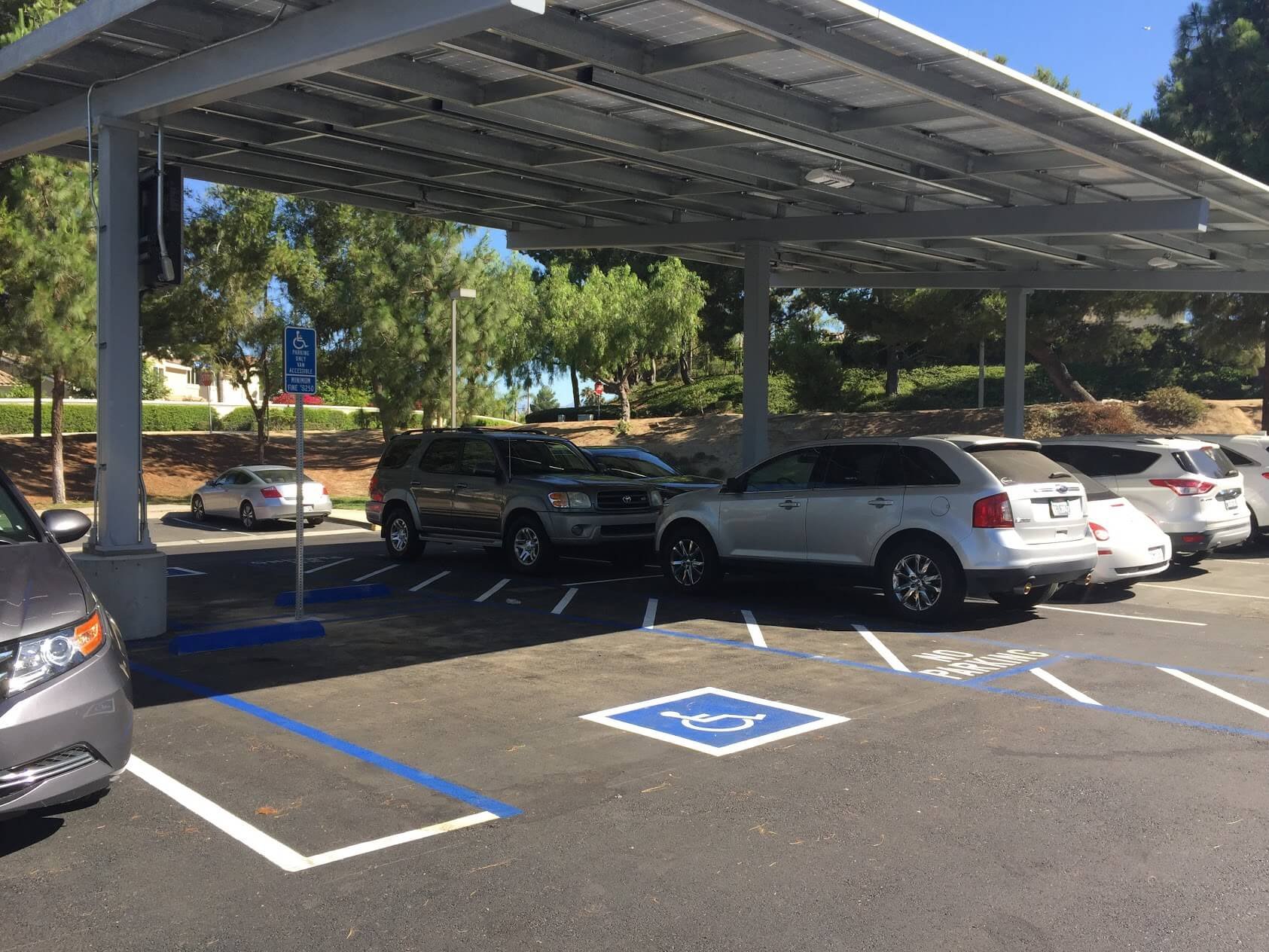
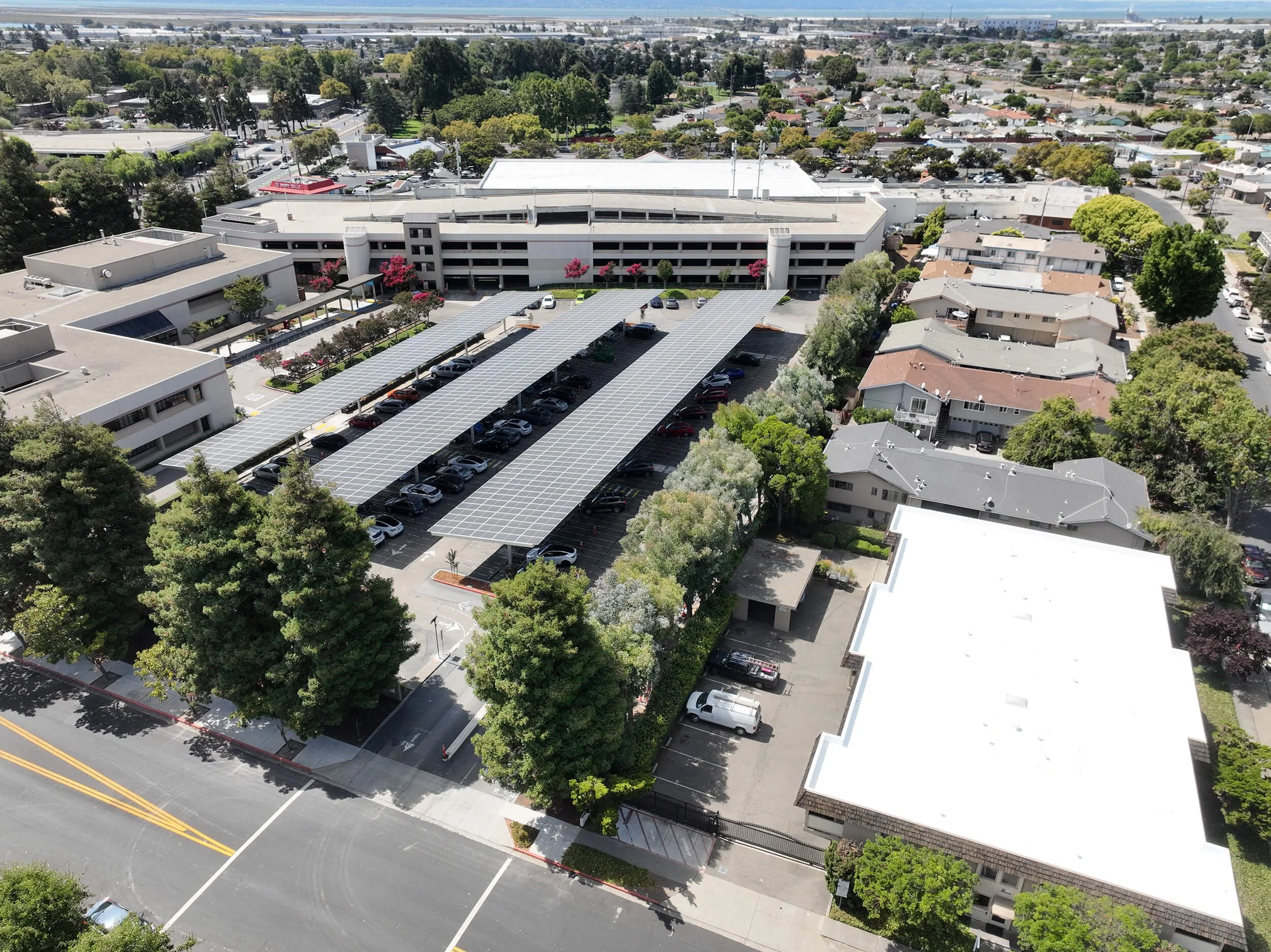
Solar shade structures are located differently depending on site context. On commercial sites, they are typically installed within active parking areas, where placement affects fire access, egress, accessible parking, and pedestrian circulation. At schools and other regulated facilities, shade structures may be located over play fields, courts, or other hardscape areas, introducing different permitting considerations.
We assist with site planning and layout to ensure that shade structure designs align with existing site conditions and the applicable regulations. This includes reviewing elements such as parking counts, accessibility, drive aisles, and how these elements are documented for permitting.
Permitting and Approval Considerations
Solar permitting requirements are not applied uniformly across jurisdictions. Shade structures, in particular, often require additional documentation to demonstrate compliance with building and fire codes. Zoning constraints, setbacks, and utility coordination can also influence system placement and design.
Our role includes preparing and coordinating permit submittals, addressing plan review comments, and communicating directly with authorities having jurisdiction to resolve questions as they arise.
Architectural Services for Solar Projects
Our architectural services are structured to support solar projects through planning, permitting, and construction documentation. The scope of work is customized to project needs and may include:
Site planning and layout coordination
Architectural drawings prepared for permit review
Code analysis related to building, fire, zoning, and accessibility compliance
Coordination with engineers, contractors, and reviewing agencies
Solar Projects for Schools and Regulated Facilities
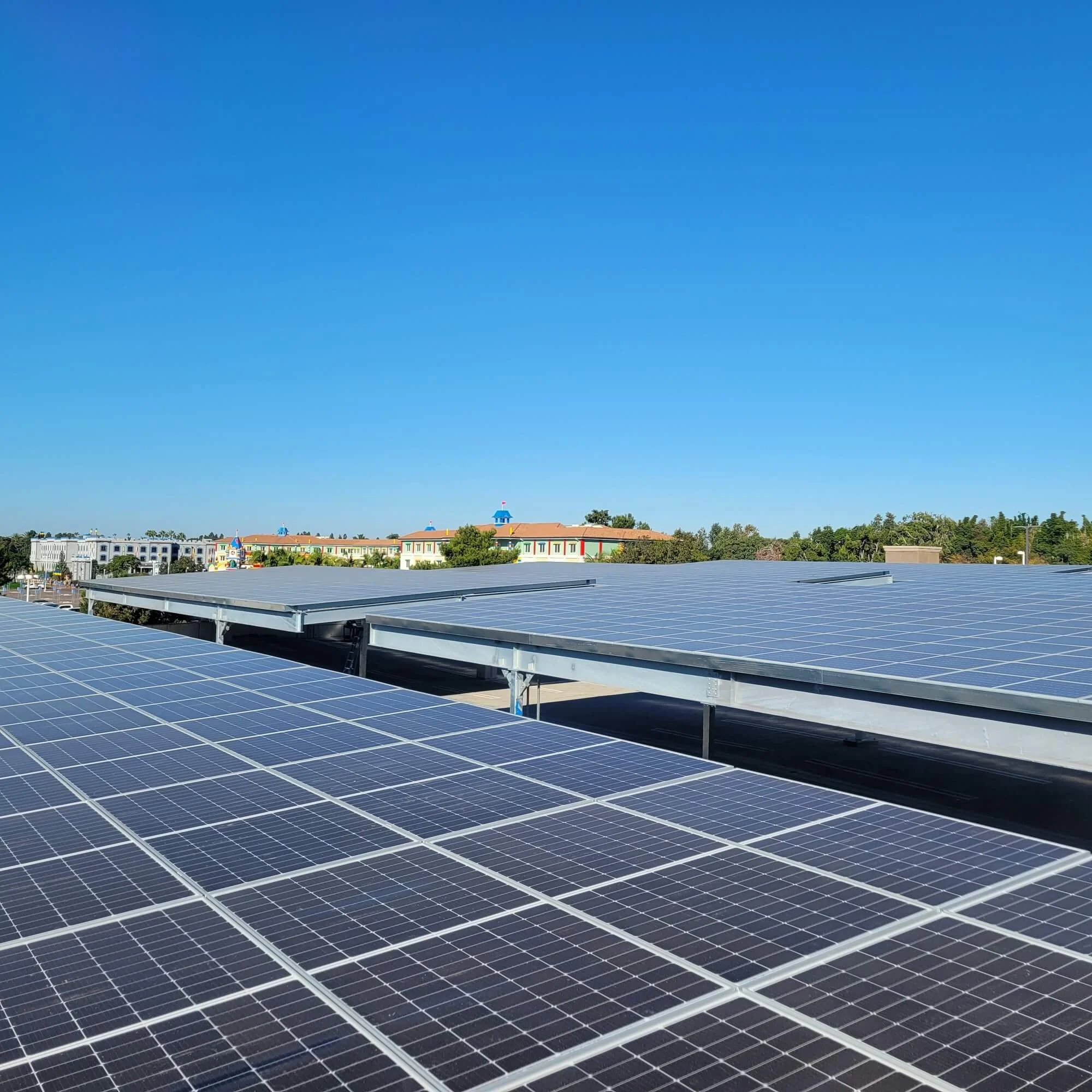
Solar projects at schools and other regulated facilities are subject to additional review standards. In California, many of these projects are reviewed by the Division of the State Architect (DSA), which introduces requirements that differ from typical commercial sites.
Our experience with DSA-reviewed solar projects informs how we approach site planning, documentation, and permitting for school campuses and other regulated facilities.
Looking for More Detail?
Discuss Your Solar Project
If your project involves commercial solar installations or solar shade structures and requires architectural input for permitting and compliance, we can help clarify requirements and define next steps.