
Battery Energy Storage Systems (BESS)
Battery storage is frequently introduced as a logical extension of a solar project. It is typically added after solar locations are established, assuming that the site can accommodate it without significant changes to layout or approvals.
However, fire access, separation distances, and emergency response requirements determine whether battery energy storage can be approved at all. On smaller or constrained sites, these conditions matter more than system size or technology.
MMPV Design works with project teams early to confirm whether battery storage can be approved on a site, before layout decisions and permitting strategies commit the project to a path that is difficult to change.

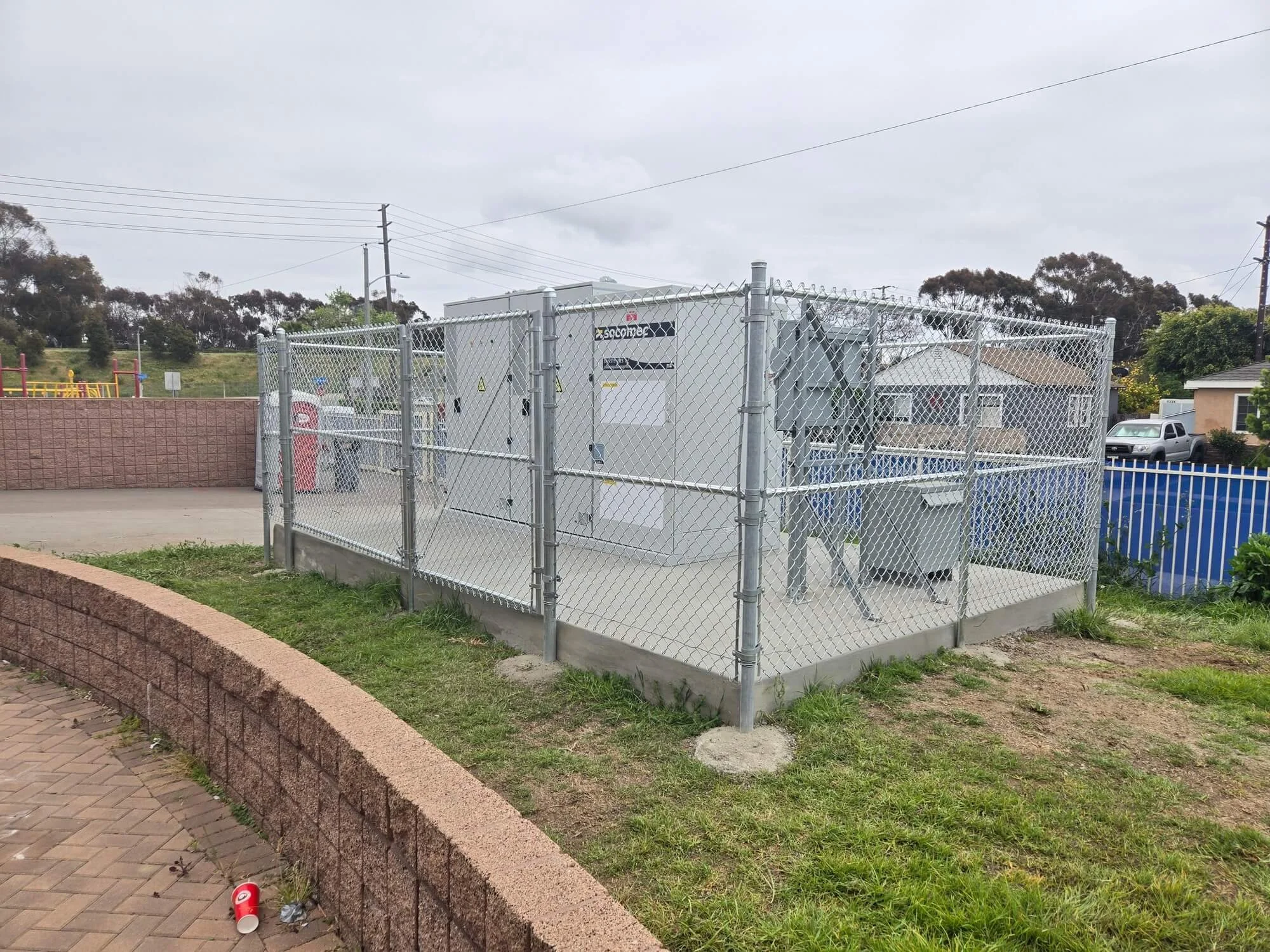
Where Battery Storage Alters Project Feasibility
Solar installations are typically reviewed around setbacks, access, and electrical coordination. Battery storage introduces a different review framework.
When energy storage is added, the focus shifts to life safety. Larger battery storage sizes require a larger footprint to incorporate all the clearance requirements. They must be sited away from egress and buildings, but close to emergency vehicle access and fire hydrants. Once batteries are introduced, those site limitations become approval blockers rather than secondary concerns.
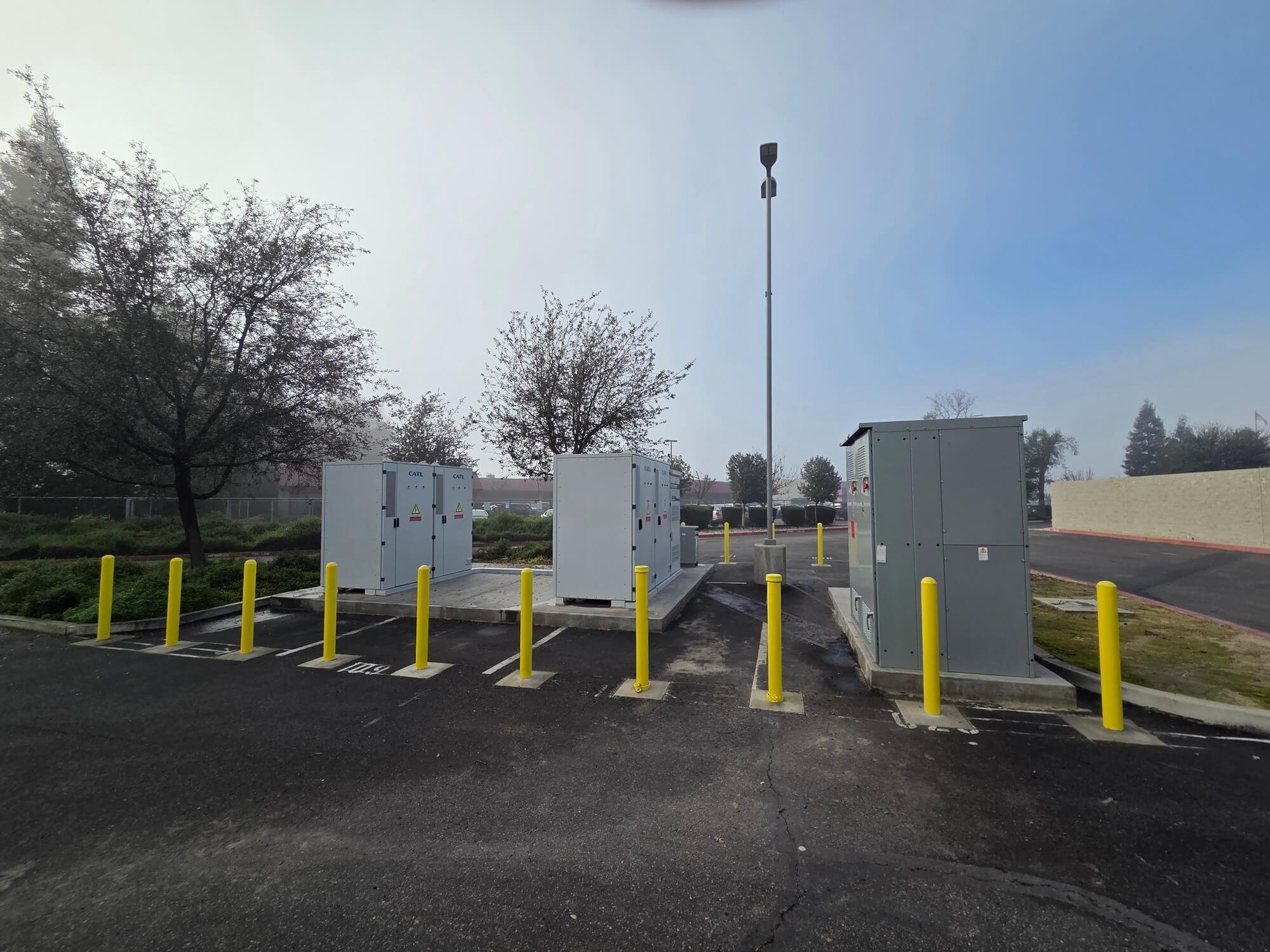
What Review Agencies Focus On First
Battery storage is reviewed through a life-safety framework. Fire and building officials evaluate separation, access, and emergency response before considering system performance.
Review typically centers on two areas:
Location and Response Conditions
Agencies assess proximity to occupied buildings, hydrants, and how responders would approach the system under worst-case conditions. These factors are evaluated early and tied directly to site layout.
System Testing and Certification
Agencies also require confirmation that the system meets recognized safety standards. UL listings, component-level certifications, fire scale testing data, and supporting documentation from licensed fire protection engineers are commonly requested during review.
Coordinating site placement with required testing documentation is critical to maintaining approval momentum.
Conditions That Define Layout
Battery storage is reviewed first through a life-safety lens. As a result, layout decisions are driven less by design preferences and more by whether a site can meet strict safety conditions during emergency scenarios.
The following factors are not secondary considerations. Each one can independently determine whether battery storage is feasible on a given solar site.
Separation Requirements Limit Placement
Battery storage is subject to minimum separation distances from buildings, property lines, and adjacent equipment. These requirements establish hard limits on where storage can be located. Once those limits are reached, layout flexibility is lost, regardless of system size or performance goals.
Fire Access Overrides Site Planning
Fire departments review battery storage with emergency response as the primary concern. Apparatus access, approach routes, and staging areas routinely take precedence over other site planning considerations.
When required access cannot be maintained, the layout must change. In many cases, fire access requirements dictate final placement more directly than any other review condition.
Proximity to People Triggers a Conservative Review
Battery storage located near occupied buildings, public areas, or critical facilities is reviewed with reduced tolerance for risk. Proximity to people increases scrutiny and limits acceptable placement options.
On active campuses and mixed-use sites, this condition often requires additional documentation, revised layouts, or reduced storage scope to meet review expectations.
How Battery Storage Affects the Rest of the Site
While the battery system itself occupies a defined area, required separation distances and emergency access conditions extend beyond the equipment pad.
Clearance zones can reduce usable site area. Fire access routes may alter circulation patterns. On constrained sites, storage placement can displace other infrastructure or limit future expansion.
Early architectural review allows storage requirements to be evaluated in relation to the full site, not in isolation. That coordination helps prevent conflicts that would otherwise surface during review.

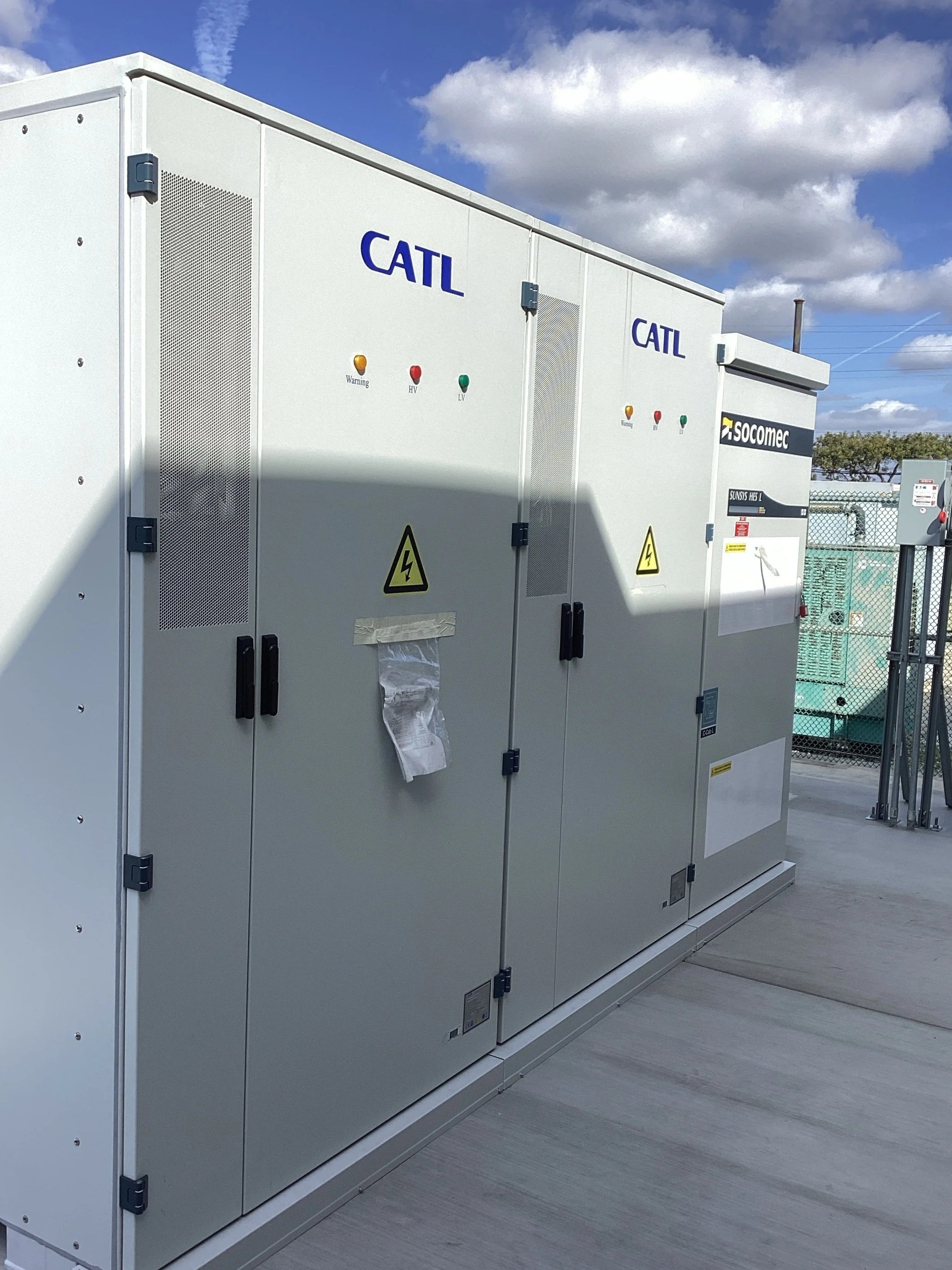
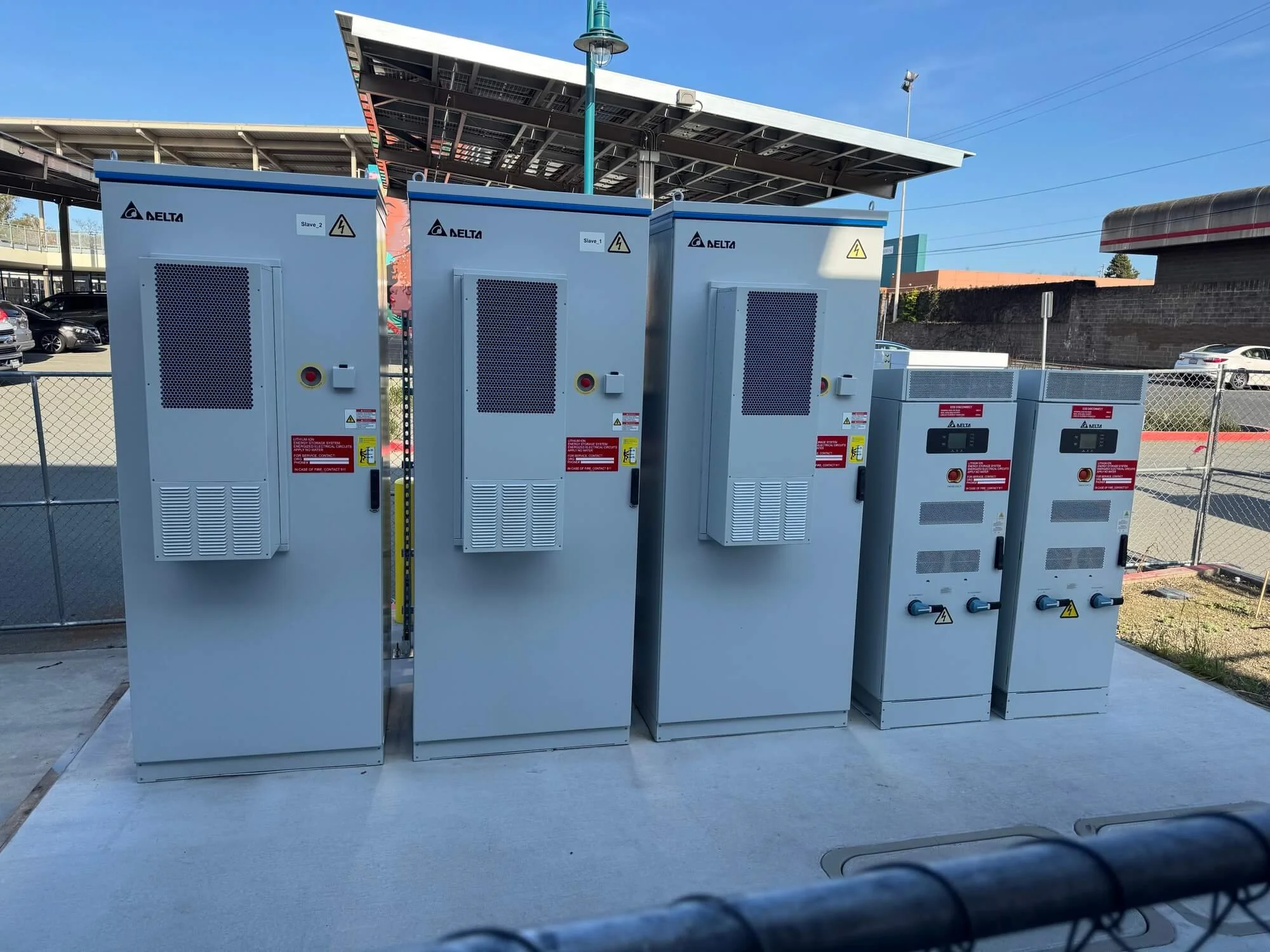
MMPV Design’s Role on Battery Storage Projects
MMPV provides architect-led support focused on feasibility, layout, and approval strategy for battery energy storage systems.
Early involvement helps identify feasibility and fire access constraints before permitting, when layout decisions are still flexible. This reduces the likelihood of redesign by aligning site layout and review expectations from the start.
We coordinate directly with engineers, fire consultants, utilities, contractors, and reviewing agencies. Where required, that involvement continues through permitting and construction to support inspections, documentation, and closeout.
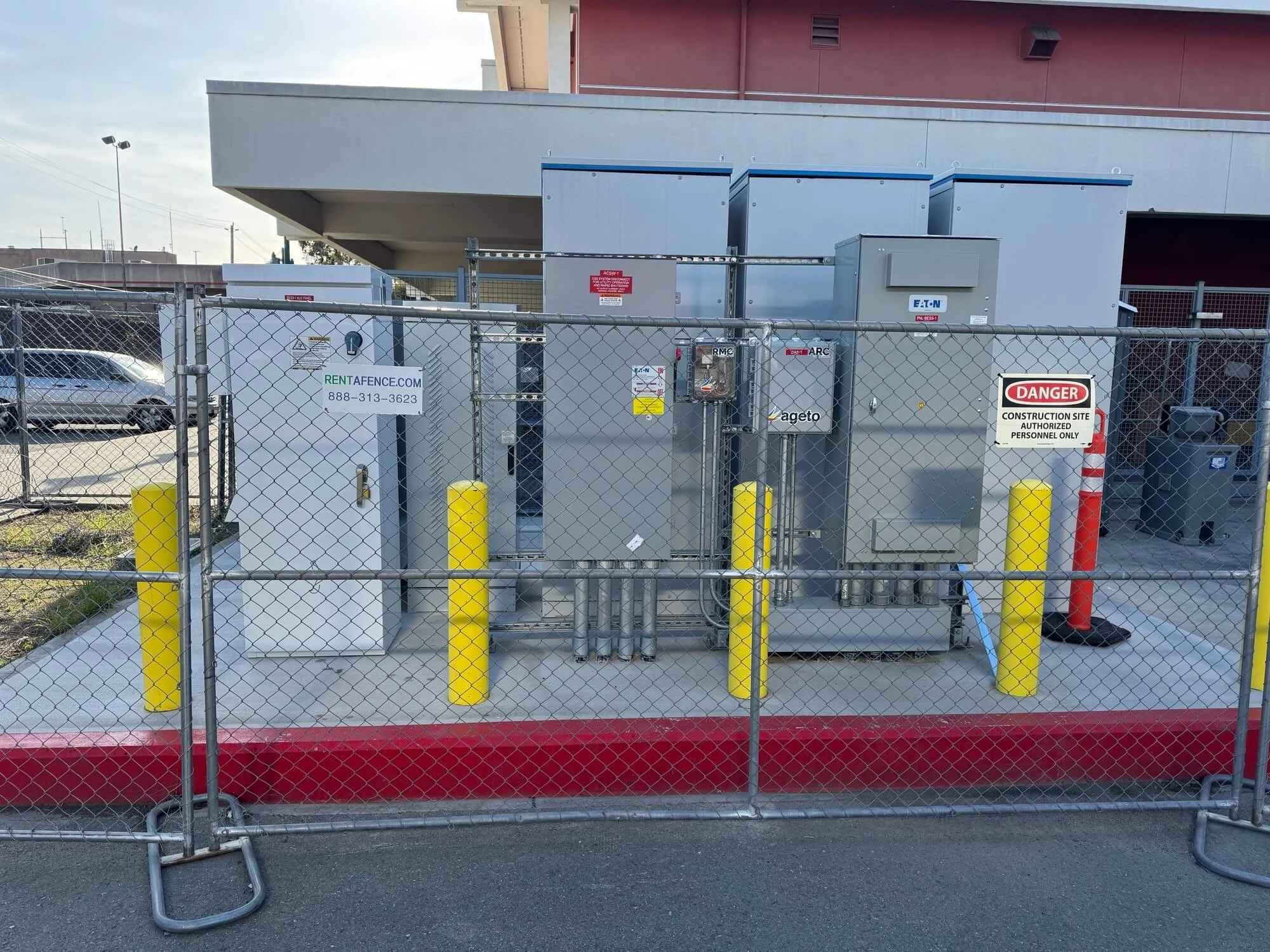
BESS Considerations for Schools and State-Regulated Projects
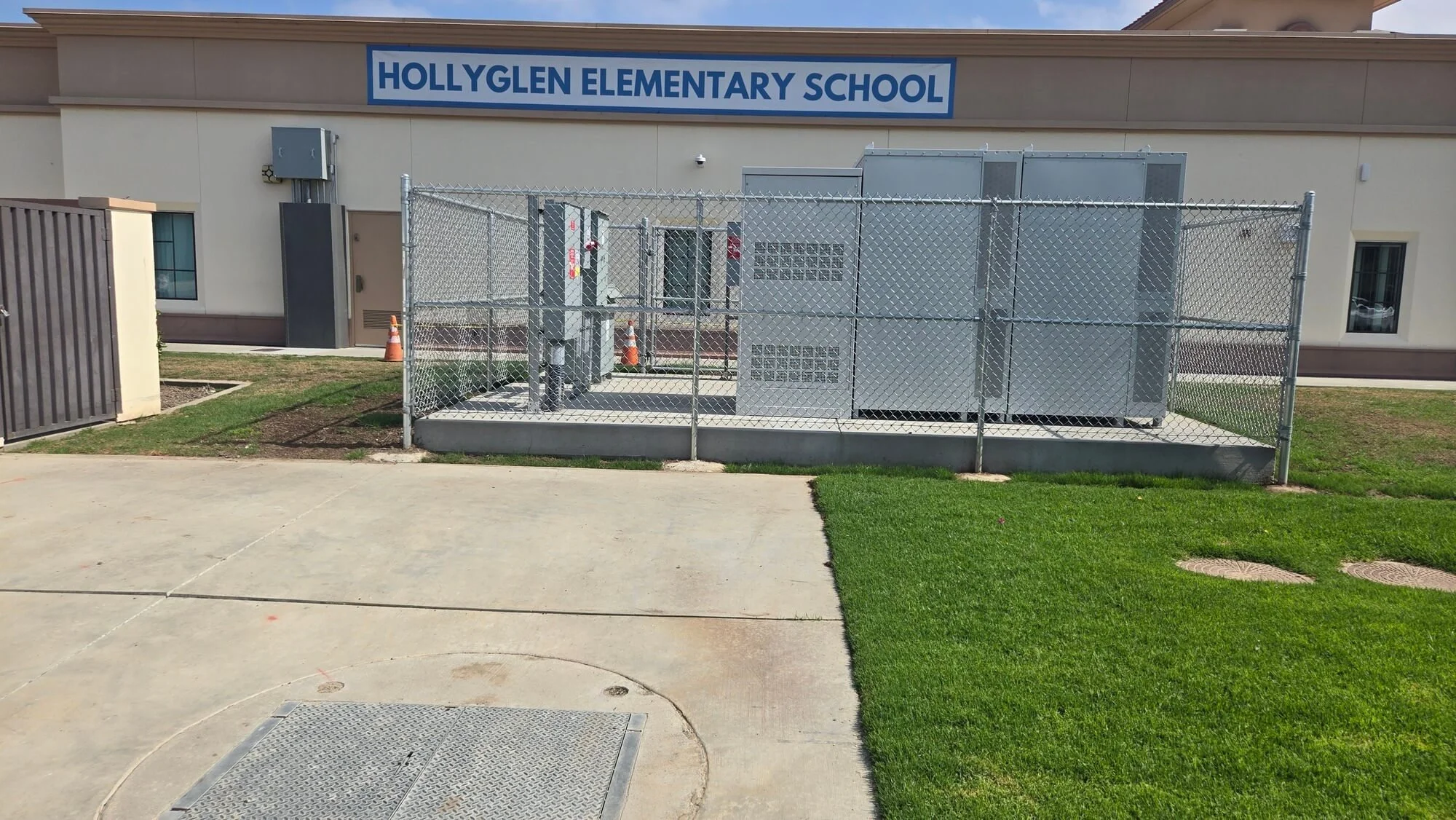
At public schools and other regulated facilities, battery storage is reviewed within an occupied, risk-averse environment. Life-safety expectations are higher, flexibility is lower, and UL testing and structural assembly documentation are reviewed more rigorously.
In California, battery energy storage systems are reviewed by the Division of the State Architect (DSA). MMPV brings extensive familiarity with DSA regulations and review practices, including how battery energy storage is evaluated through permitting and construction.
Looking for More Detail?
Reducing Risk on Battery Storage Projects
If battery storage is part of your solar scope and site constraints or life-safety requirements are unresolved, architectural input can help clarify what is feasible before approvals are underway.